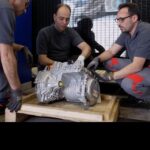


Mass electrification is transforming systems, but it does not necessarily make them more reliable. New components, electrical and thermal interactions, rising ambient temperatures, and more are multiplying potential failure sources and making them harder to detect in some cases. How can these failures be understood, analyzed, and, above all, prevented? We spoke with Paul Mazet, engineer at Cetim.
Why is electrification changing the landscape of failure analysis?
Paul Mazet: In an electrified system, electrical and electronic components are added to existing elements, creating interactions between electrical, mechanical, and thermal phenomena. Take the example of a poorly tightened electrical connection. This is a mechanical defect at the contact point that can increase electrical resistance, generate heat, and ultimately lead to system degradation.
Electrified systems are also highly sensitive to temperature. Yet the thermal conditions they operate in can evolve over time. For example, a train designed ten years ago to operate within a specific temperature range may now face more severe conditions due to climate change. These conditions can increase the risk of failure.
Heat does not necessarily cause an immediate breakdown. It may first lead to reduced performance. In such cases, it is often possible to reduce the power output of a piece of equipment or, in the case of a train, its speed, in order to remain within the nominal operating range. However, when constraints become too great, performance degradation can escalate into failure and even thermal runaway.
Why are electrical failures more difficult to analyze?
In mechanics, a failure often leaves visible traces: a fracture, metal particles in the oil, noise, vibrations, or marks on a component. In electrical and electronic systems, this is far less systematic. A fault may be intermittent. By the time an investigation takes place, the phenomenon may have disappeared without leaving any evidence. Failures can also be difficult to locate when the defect lies deep within a miniaturized component, such as a power transistor.
In our failure analysis work, this means considering several possible scenarios, comparing them with observations, and searching for more subtle clues. Understanding the system as a whole also becomes essential, since a failure may result from interactions between several components or phenomena. Investigations can then be extended in the laboratory using microscopy, tomography, or multi-physics testing. Artificial intelligence can help guide investigations, although it cannot by itself determine the root cause of a failure.
How can more reliable electrified systems be designed?
The first requirement is to have genuine electrical and electronic expertise from the design stage onwards. Engineering departments can no longer rely solely on mechanical skills supplemented by a basic understanding of electricity. Electrified systems require dedicated expertise, particularly to address integration challenges.
Design must also adopt a multi-physics approach, one that Cetim actively implements, to account for real operating conditions. This means considering the electrical and thermal properties of components simultaneously, as well as their integration into the overall system. This approach applies even to the simplest elements. For example, the performance of a cable insulation material may deteriorate with temperature, leading to leakage currents or even dielectric breakdown. As a result, the selection of materials and components becomes a critical aspect of reliability engineering.
Finally, standards provide a regulatory framework, but they are not always sufficient to guarantee reliability under every operating condition a system may encounter. Anticipation is therefore essential. Risk analysis and FMEA (Failure Modes and Effects Analysis) make it possible to explore a wide range of scenarios during the design phase and prevent failures before they occur.
Discover Cetim’s expertise and facilities dedicated to electrification in this video:
Watch the video
To learn more about our Failure Analysis solutions and services, visit our dedicated webpage.