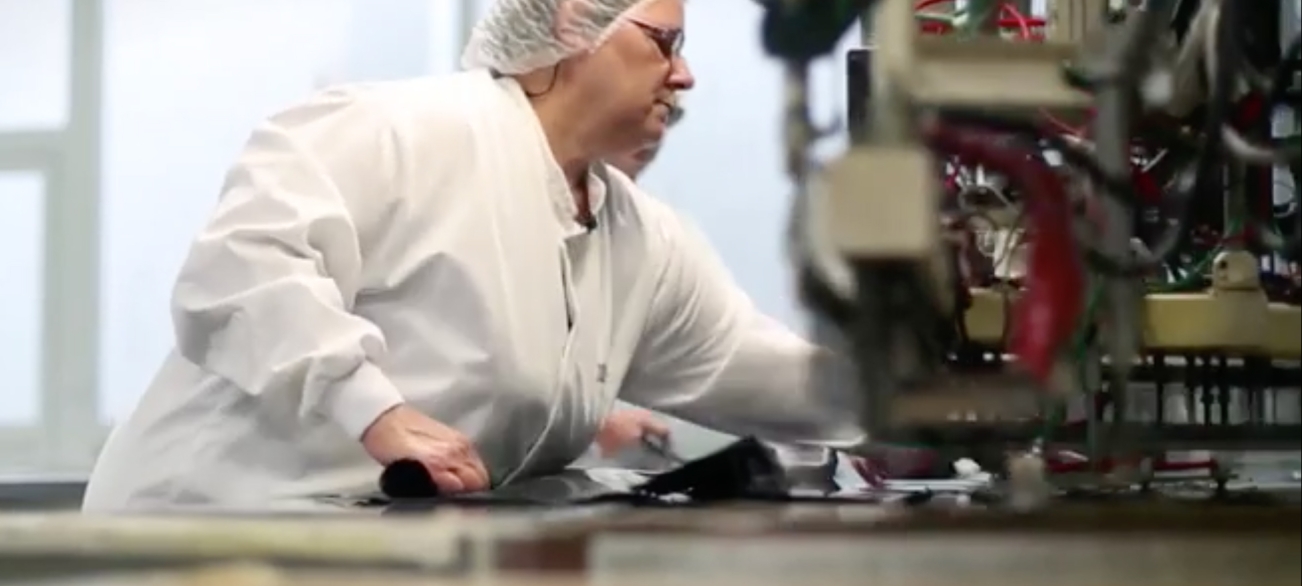
For Tisza Textil Packaging, modernisation is a matter of survival. In 2016, when Antoine Pinon took over this subsidiary of a Hungarian group specialising in flexible containers for the pharmaceutical industry and the fertiliser industry, the employees had been manufacturing the same products for 30 years, the silo organisation was preventing any form of reactivity and the company had settled into a routine. Antoine Pinon first made his employees aware of the need for modernisation and asked Cetim to make a diagnostic in May 2018. Further to Cetim’s recommendations, the company decided to focus on the “Minibags for pharmacy” activity, which is more profitable than the “Fertiliser bags” activity. To that end, it appeared necessary to simplify the process, automate the assembly operations and introduce versatility into the workshops.
Three projects launched
The diagnostic proposed twenty projects. Antoine Pinon and his team selected three of these projects and implemented them with Cetim’s assistance. The first industrial project consisted of experimenting with a cobot to attach lugs to a bag and turned out to be a semi-failure. “This is part of the experimentation process”, says Antoine Pinon. “All the employees have understood the interest of working with a cobot. We will certainly reconsider this later.” The second industrial project, i.e. the automation of the bag assembly line, with flat sewing stations and a 3D sewing station, should see an outcome in late 2019. The remaining project is the digital modelling of the company’s operation in order to implement an ERP software and the connection with the production equipment. Antoine Pinon acknowledges: “This is not simple. For our employees, everything is new, including the operation in project mode. But they play the game because they have faith and understand that automation is necessary to meet the flexibility needs of our customers.”