The case
Hydrogen imposes specific constraints on industrial sealing solutions. “The compatibility of our valves with hydrogen is a key criterion for our customers”, says Jonathan Geleijns, Energy Transition Technologies Manager at SLB. That is why SLB, which manufactures valves for hydrogen equipment, joined the R&D project led and piloted by Cetim. Bringing together seven manufacturers, it aimed to transpose protocols and experimental methods from the oil and gas industry to H2.
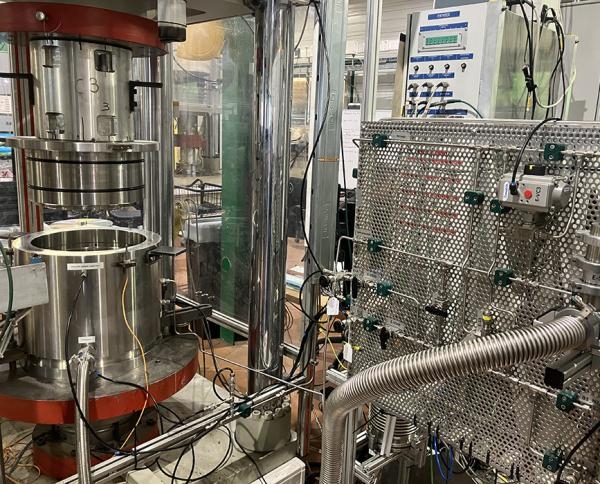
“As a manufacturer, we were heavily involved in the material selection; other partners helped to define the test conditions in order to replicate real-life usage situations as closely as possible”, explains Jonathan Geleijns. The tests, conducted in pure H₂ or H₂/CH₄ mixtures, focused on several components: elastomer seals, flanged assemblies (elastomer, PTFE, graphite or metal) and industrial valves. They made it possible to analyse gas permeability, rapid gas decompression behaviour, material ageing and sealing performance, among other things, based on leak measurements before and after ageing.
Shared resources for concrete results
Beyond the tests themselves, the strength of the project lies in the pooling of resources within a neutral framework. Cetim contributed more than half of the total budget (€830,000), with a budget reserve allowing for additional tests to be carried out. The results, shared in a fully transparent manner, provided each manufacturer with directly actionable conclusions. “In addition to validating our knowledge, Cetim provided benchmarks that will strengthen customer confidence in our products, concludes Jonathan Geleijns. By promoting exchanges between partners, this project has led to a better understanding of our users needs”.