The case
When exposed to floating hydrocarbons or chlorinated solvents, the special elastomer membrane in Néréides’ OilSpy detector dissolves and, like a fuse, triggers an alarm in the event of pollution at industrial sites, oil platforms, drinking water intake sites, etc.
Previously, manufacturing a batch of 1,500 membranes required 200 hours. “Bonding the membrane by hand was time-consuming, arduous, and lacked consistency,” explains Didier Becq, Director of Néréides. To reduce a production cost considered too high, he turned to Cetim. An in situ analysis of the manufacturing process made it possible to break down the costs and identify areas for improvement.
Less material and a simplified manufacturing process
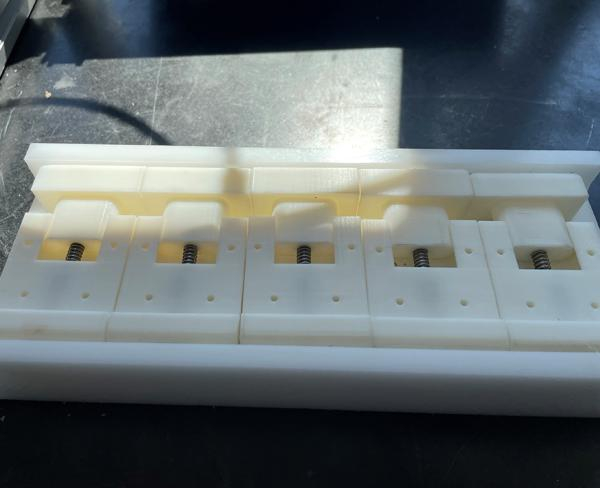
As part of a redesign-to-cost approach, the recommendations focused on the membrane geometry and on the cutting and assembly operations. The new membrane design and optimized cutting process reduce scrap and cut the volume of an expensive raw material by nearly half. Instead of using a utility knife, a die cutter makes it possible to cut several strips in a single operation. This faster method produces straighter, more consistent cuts while eliminating the risk of cuts associated with the utility knife. Brush-applied adhesive bonding is replaced by ultrasonic welding, which is easier to perform, improves assembly robustness, and eliminates solvent emissions from the adhesive.
“Cetim provides practical, highly concrete solutions that the special-purpose machine manufacturer we had approached was unable to provide. In addition, this outside perspective encourages our engineers to evolve their practices,” emphasizes Didier Becq.
The redesigned equipment, produced in-house, is now in operation. Manufacturing time has been reduced tenfold, and the overall production cost of the membrane has decreased by 40%.
Cetim’s asset
Demonstrating that a redesign-to-cost approach, even for a very simple part, can optimize the process to achieve savings in both costs and production cost.